
 简体中文
简体中文
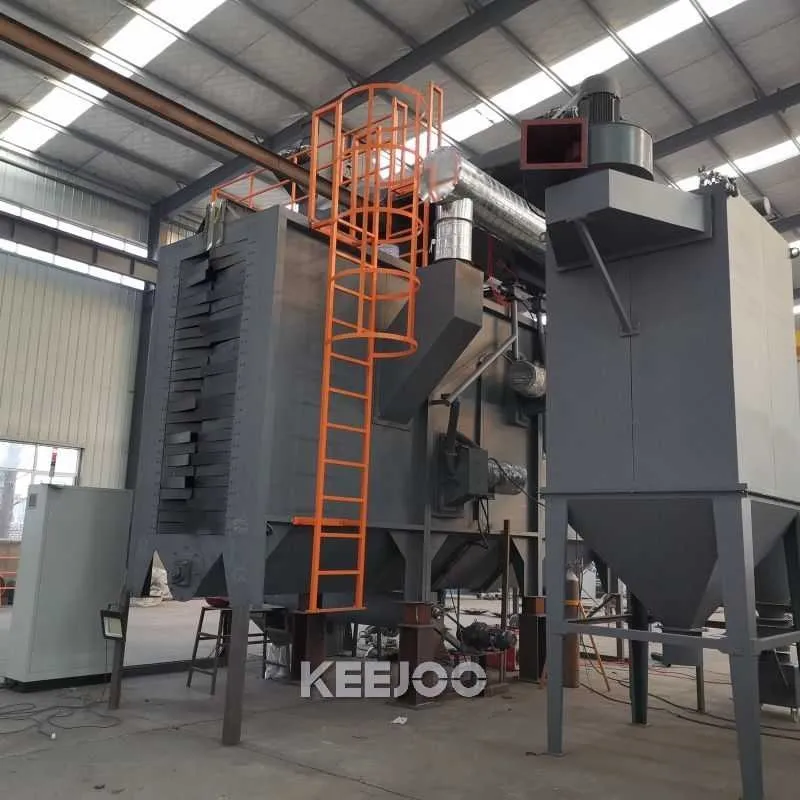
Whether the cleaning effect of the hook shot blasting machine is affected by the material of the workpiece
The cleaning effectiveness of a hanger shot blasting machine can indeed be influenced by the material of the workpiece. Different materials exhibit varying degrees of hardness, density, and surface properties, which can affect the efficiency and outcome of the cleaning process. Here's a brief description in English:
The cleaning performance of a hook-type shot blasting machine is material-dependent. Softer materials, such as aluminum or copper, may require less aggressive blasting parameters to avoid excessive damage, while harder materials like steel or cast iron can withstand more forceful treatment. The density of the material can also impact the penetration of the shot, with denser materials potentially requiring more time or a higher volume of shot to achieve the desired surface finish.
Moreover, the surface condition of the workpiece plays a role. Rust, scale, or coatings on the material can affect the ease with which the shot removes contaminants. Some materials may have adherent coatings that require a specific type or size of shot, or a particular blasting angle and speed, to effectively remove them.
Additionally, the composition of the material can influence the rate of wear on the shot and the machine's components, necessitating adjustments in maintenance schedules and replacement parts.
In summary, the material properties of the workpiece, including its hardness, density, surface condition, and composition, can all impact the cleaning efficiency and effectiveness of a hanger shot blasting machine. Properly understanding and accounting for these factors is crucial for achieving optimal cleaning results without damaging the workpiece or the equipment.
 Skype
Skype demo@admin.com
 400-12345-67890
 13988889999