

Smart door lock security comparison: fingerprint, password, face who is stronger?

智能门锁安全大比拼:指纹、密码还是人脸?

Smart door lock security competition: fingerprint, password or face?

With the popularity of smart homes, smart door locks have gradually become the first line of defense for home security. Faced with a wide range of products on the market, consumers are most concerned about the question: which unlocking method is the safest? Fingerprint, password or facial recognition? This article will make a deep comparison from multiple dimensions such as security, convenience, and applicable scenarios to help you make an informed choice.

Overview of the technical principle of unlocking method

The unlocking methods of smart door locks are mainly divided into three categories: fingerprint recognition, password input and facial recognition. Fingerprint recognition collects fingerprint images through optical or semiconductor sensors and compares them with stored fingerprint templates; password input relies on digital keypads, which usually support virtual password functions; facial recognition uses 3D structured light or binocular cameras to obtain face depth information to achieve live detection. Each technology has its own unique advantages and latent risks.

II. Safety comparison

Unlock method
anti-counterfeiting capability
privacy protection
latent risk
fingerprint recognition
Fingerprints are unique, but replica fingerprints can be cracked (low-end products)
Requires contact, fingerprints may remain, but can be cleaned regularly
Recognition fails when fingers are slippery or injured
Password input
Passwords can be set in complex combinations, but are easily recorded by shoulder peeps or cameras
Virtual password technology can prevent peeping, but there are many operation steps
Passwords are easily forgotten or leaked
facial recognition
3D live detection can effectively prevent photo/video attacks with high security
Non-contact, no physical traces, but the camera may be disturbed
Twins or facial changes may be mistaken

III. Convenience comparison

Unlock method
speed
applicable scenario
user-friendliness
fingerprint recognition
0.3-0 seconds
Suitable for adults with dry fingers, elderly fingerprint wear may be difficult to identify
Simple operation, but requires accurate pressing
Password input
3-5 seconds
Suitable for all groups of people, but typing errors require retry
You need to remember the password, and the virtual password increases the complexity.
facial recognition
About 1 second
Suitable for all people, no need to touch, especially suitable for holding children or carrying objects
You need to look at the camera, which is affected by light.

IV. Security bugs and protective measures

fingerprint recognition
Low-end optical fingerprints may be deceived by fake fingerprints, but mainstream semiconductor fingerprints have a live detection function and are less risky. It is recommended to choose products with anti-counterfeiting algorithms.

Password input
: The main risk is peeping and recording. Using the virtual password function or blocking the keyboard when typing can effectively reduce the risk. In addition, it is also important to change the password regularly.

facial recognition
2D cameras can be easily fooled by photos, so be sure to choose a 3D structured light or binocular solution and ensure that live detection is supported. Night infrared fill light is also a necessary function.

Comprehensive recommendations and purchase suggestions

Let's put it all together.
facial recognition
Best performance in terms of safety and convenience, especially suitable for home use. But considering the cost,
fingerprint recognition
It is a cost-effective choice, and
password
As a backup method is indispensable. Therefore, we recommend choosing
Support multiple unlocking methods
Smart door locks, such as "face + fingerprint + password" combination, can not only enjoy the convenience brought by high technology, but also ensure security.

When purchasing, please pay attention to the following points:

  • Select well-known brands to ensure after-sales services and firmware updates.
  • Verify the sensor type of the biometric module (e.g. semiconductor fingerprint, 3D camera).
  • Check whether it has functions such as anti-pry alarm, virtual password, and anti-cat eye opening.
  • Select the appropriate lock body according to the door structure to avoid installation problems.

Ultimately, the security of a smart door lock depends not only on the way it is unlocked, but also closely related to product quality, installation environment and usage habits. I hope this article will help you find the most suitable smart door lock for home use, adding security to your home.
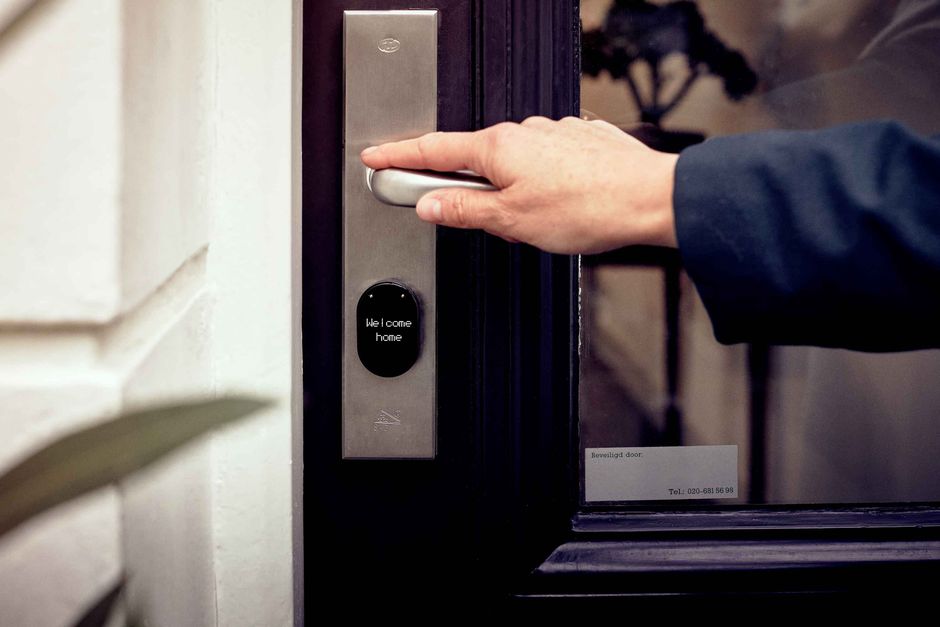

智能门锁

智能门锁

SHARE

Online service

Skype demo@admin.com 400-12345-67890 13988889999
Home Mobile
Top
Skype Contact Us
We use cookie to improve your online experience. By continuing to browse this website, you agree to our use of cookie.

Cookies

Please read our Terms and Conditions and this Policy before accessing or using our Services. If you cannot agree with this Policy or the Terms and Conditions, please do not access or use our Services. If you are located in a jurisdiction outside the European Economic Area, by using our Services, you accept the Terms and Conditions and accept our privacy practices described in this Policy.
We may modify this Policy at any time, without prior notice, and changes may apply to any Personal Information we already hold about you, as well as any new Personal Information collected after the Policy is modified. If we make changes, we will notify you by revising the date at the top of this Policy. We will provide you with advanced notice if we make any material changes to how we collect, use or disclose your Personal Information that impact your rights under this Policy. If you are located in a jurisdiction other than the European Economic Area, the United Kingdom or Switzerland (collectively “European Countries”), your continued access or use of our Services after receiving the notice of changes, constitutes your acknowledgement that you accept the updated Policy. In addition, we may provide you with real time disclosures or additional information about the Personal Information handling practices of specific parts of our Services. Such notices may supplement this Policy or provide you with additional choices about how we process your Personal Information.


Cookies

Cookies are small text files stored on your device when you access most Websites on the internet or open certain emails. Among other things, Cookies allow a Website to recognize your device and remember if you've been to the Website before. Examples of information collected by Cookies include your browser type and the address of the Website from which you arrived at our Website as well as IP address and clickstream behavior (that is the pages you view and the links you click).We use the term cookie to refer to Cookies and technologies that perform a similar function to Cookies (e.g., tags, pixels, web beacons, etc.). Cookies can be read by the originating Website on each subsequent visit and by any other Website that recognizes the cookie. The Website uses Cookies in order to make the Website easier to use, to support a better user experience, including the provision of information and functionality to you, as well as to provide us with information about how the Website is used so that we can make sure it is as up to date, relevant, and error free as we can. Cookies on the Website We use Cookies to personalize your experience when you visit the Site, uniquely identify your computer for security purposes, and enable us and our third-party service providers to serve ads on our behalf across the internet.

We classify Cookies in the following categories:
 ●  Strictly Necessary Cookies
 ●  Performance Cookies
 ●  Functional Cookies
 ●  Targeting Cookies


Cookie List
A cookie is a small piece of data (text file) that a website – when visited by a user – asks your browser to store on your device in order to remember information about you, such as your language preference or login information. Those cookies are set by us and called first-party cookies. We also use third-party cookies – which are cookies from a domain different than the domain of the website you are visiting – for our advertising and marketing efforts. More specifically, we use cookies and other tracking technologies for the following purposes:

Strictly Necessary Cookies
These cookies are necessary for the website to function and cannot be switched off in our systems. They are usually only set in response to actions made by you which amount to a request for services, such as setting your privacy preferences, logging in or filling in forms. You can set your browser to block or alert you about these cookies, but some parts of the site will not then work. These cookies do not store any personally identifiable information.

Functional Cookies
These cookies enable the website to provide enhanced functionality and personalisation. They may be set by us or by third party providers whose services we have added to our pages. If you do not allow these cookies then some or all of these services may not function properly.

Performance Cookies
These cookies allow us to count visits and traffic sources so we can measure and improve the performance of our site. They help us to know which pages are the most and least popular and see how visitors move around the site. All information these cookies collect is aggregated and therefore anonymous. If you do not allow these cookies we will not know when you have visited our site, and will not be able to monitor its performance.

Targeting Cookies
These cookies may be set through our site by our advertising partners. They may be used by those companies to build a profile of your interests and show you relevant adverts on other sites. They do not store directly personal information, but are based on uniquely identifying your browser and internet device. If you do not allow these cookies, you will experience less targeted advertising.

How To Turn Off Cookies
You can choose to restrict or block Cookies through your browser settings at any time. Please note that certain Cookies may be set as soon as you visit the Website, but you can remove them using your browser settings. However, please be aware that restricting or blocking Cookies set on the Website may impact the functionality or performance of the Website or prevent you from using certain services provided through the Website. It will also affect our ability to update the Website to cater for user preferences and improve performance. Cookies within Mobile Applications

We only use Strictly Necessary Cookies on our mobile applications. These Cookies are critical to the functionality of our applications, so if you block or delete these Cookies you may not be able to use the application. These Cookies are not shared with any other application on your mobile device. We never use the Cookies from the mobile application to store personal information about you.

If you have questions or concerns regarding any information in this Privacy Policy, please contact us by email at . You can also contact us via our customer service at our Site.