
 English
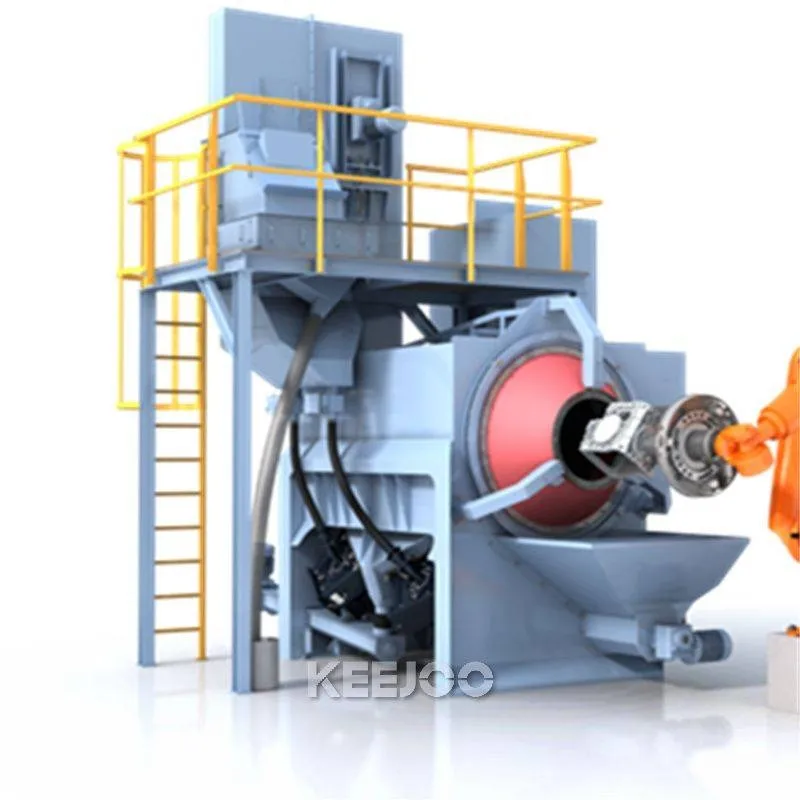
How to Choose the Appropriate Power for a Shot Blasting Machine?
I. First, Master the Core Principles
The larger and heavier the workpiece—and the harder its material or thicker its scale—the higher the power rating required for the corresponding shot blasting unit.
Selecting insufficient power results in incomplete cleaning; conversely, selecting excessive power leads to wasted electricity, accelerated wear, and increased costs. II. 4 Key Factors Determining Power Requirements
1. Workpiece Material Hardness
Soft Materials: Carbon steel, standard welded parts, thin plates → Small to medium power
Hard Materials: Forgings, cast steel parts, high-strength steel, thick mill scale → High power is mandatory
2. Workpiece Size and Wall Thickness
Thin-walled or Small Parts: Impact force must not be excessive; low power is sufficient
Heavy, Large Structural Parts or Forgings: Require high shot-blasting kinetic energy; high power is necessary
3. Cleaning Grade Requirements
Standard Rust Removal/Surface Cleaning: Conventional power is adequate
Requirements for High Grades (Sa2.5, Sa3) or Surface Strengthening: Must increase power output and/or increase the number of blast wheels
4. Production Output Volume
Low Output / Intermittent Production: Standard power configuration is suitable
High-Volume Continuous Production / Assembly Line Operations: Select a slightly higher power rating to boost efficiency and reduce total operating time
III. Simplified Power Selection Guide for Hook-Type Shot Blasting Machines
Small Workpieces / Light Steel Structures
A single blast wheel of 7.5 kW or 11 kW is sufficient
Standard Castings / Conventional Welded Structures
Equipped with 11 kW or 15 kW blast wheels; total power for a dual-wheel configuration is 15–22 kW
Forgings / Cast Steel Parts / Heavy Engineering Machinery Components
Single blast wheel of 15 kW or 18.5 kW; total power for a dual-wheel configuration is 30–37 kW
Large Wind Power Components / Rail Transit Parts / Thick Plates & High-Strength Components
Select 18.5 kW or higher; utilize a multi-wheel layout to ensure complete, shadow-free cleaning
IV. Consequences of Selecting Excessive or Insufficient Power
Selecting Insufficient Power
Mill scale and rust cannot be thoroughly removed
Requires extending processing time, resulting in wasted electricity and labor costs
Motor operates under prolonged overload, leading to overheating and a high risk of burnout
Selecting Excessive Power
Excessive impact force can easily deform thin-walled workpieces or create deep pitting
Accelerated wear on steel shot, wear-resistant liners, and blast wheel blades
High power consumption during idle/light-load periods, resulting in wasted production costs
 Skype
Skype demo@admin.com
 400-12345-67890
 13988889999