
 简体中文
简体中文
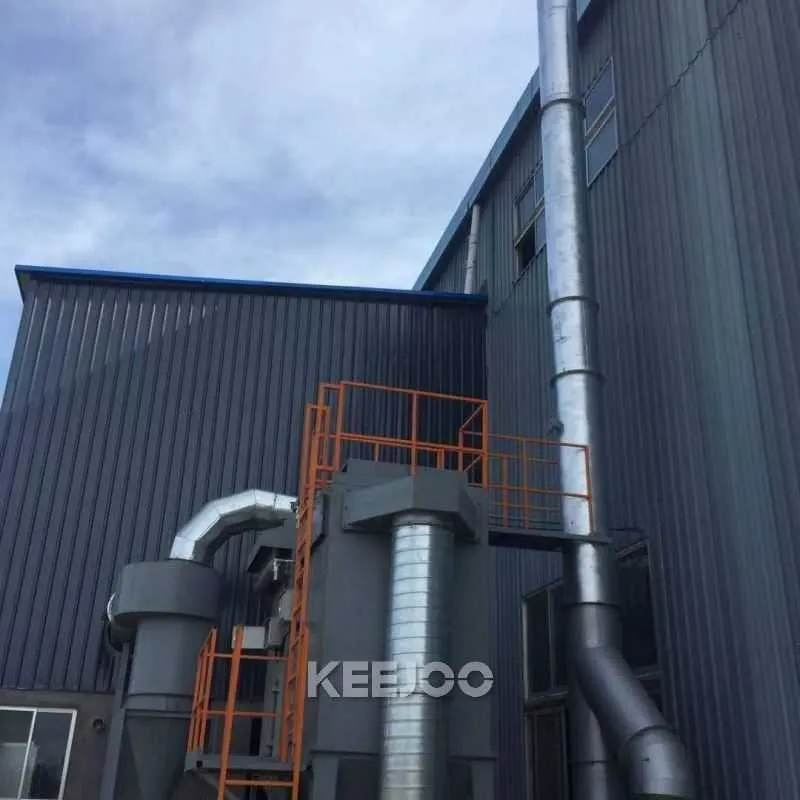
Working principle of cyclone dust collector
The working principle of the cyclone dust collector is to make the dust-containing air flow rotate, use centrifugal force to separate the dust particles from the air flow and capture them on the wall, and then use gravity to make the dust particles fall into the ash hopper. Specifically, when the dust-laden airflow enters the equipment through the inlet of the cyclone dust collector, the airflow will rotate in a tangential direction to form an external vortex. Under the action of the external vortex, the dust particles are thrown towards the wall of the container and fall along the wall, finally falling into the ash hopper. The purified gas forms an internal swirling flow and is discharged through the exhaust pipe.
The design of the cyclone dust collector involves many key components, including the air inlet pipe, exhaust pipe, cylinder and cone, etc. The size ratio of these components has a significant impact on the efficiency and pressure loss of the dust collector. For example, adjustments to parameters such as the diameter of the dust collector, the size of the air inlet, and the diameter of the exhaust pipe need to take into account the balance between efficiency and pressure loss.
 Skype
Skype demo@admin.com
 400-12345-67890
 13988889999