
 简体中文

How to Maintain Components of a Catenary-Type Shot Blasting Machine
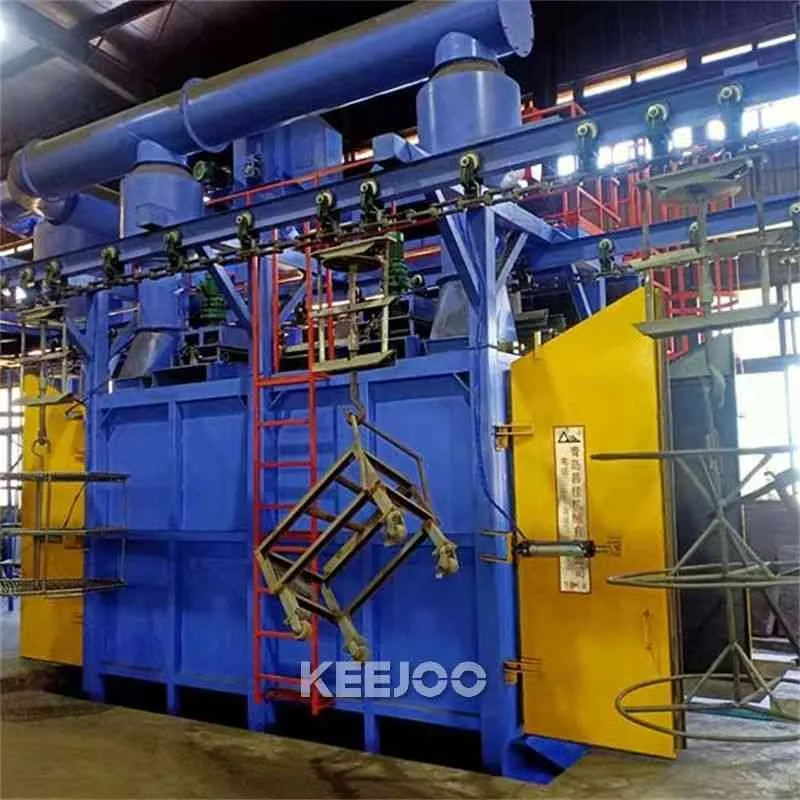
Maintenance of Components for Catenary-Type Shot Blasting Machines
The components of a catenary-type shot blasting machine include side liners, top liners, end liners, blades, impellers (distributor wheels), and control cages (directional sleeves). Failure to replace these parts when they become severely worn will significantly shorten the machine's service life.
If the shot blasting machine exhibits excessive or abnormal vibration during operation, it must be shut down to inspect the wear on consumable parts and check for the entry of any foreign objects. At the end of each shift, the consumable parts should be inspected for wear; if severe wear is detected, they must be replaced. Specifically, blades should be replaced when their thickness has decreased by 4–5 mm, their length has decreased by 4–5 mm, or when the machine begins to vibrate violently.
For the control cage, the wear on its opening (window) should be monitored. When the opening has worn by 5 mm, the control cage’s position mark should be adjusted (rotated) by 5 mm. If the opening wears by another 5 mm, the position mark should be adjusted (rotated) by an additional 5 mm. Once the opening has worn by a total of 10 mm, the control cage must be replaced.
To ensure the continued proper operation of a catenary-type shot blasting machine, it must be cleaned periodically. There are two common cleaning methods, which are described below.
The principle of shot blasting involves using centrifugal force to propel abrasive media (shot) against a workpiece to remove rust. However, shot blasting lacks flexibility and is subject to strict site requirements. It may result in "blind spots" where certain areas—such as the interior or specific surface features of a workpiece—remain uncleaned. Furthermore, the equipment features a complex design with many components prone to damage. In particular, the blades are highly susceptible to wear, leading to frequent maintenance, high upkeep costs, and a significant initial capital investment.
 Skype
 sales@knnjoo.com
 008615005326706
 15005326706